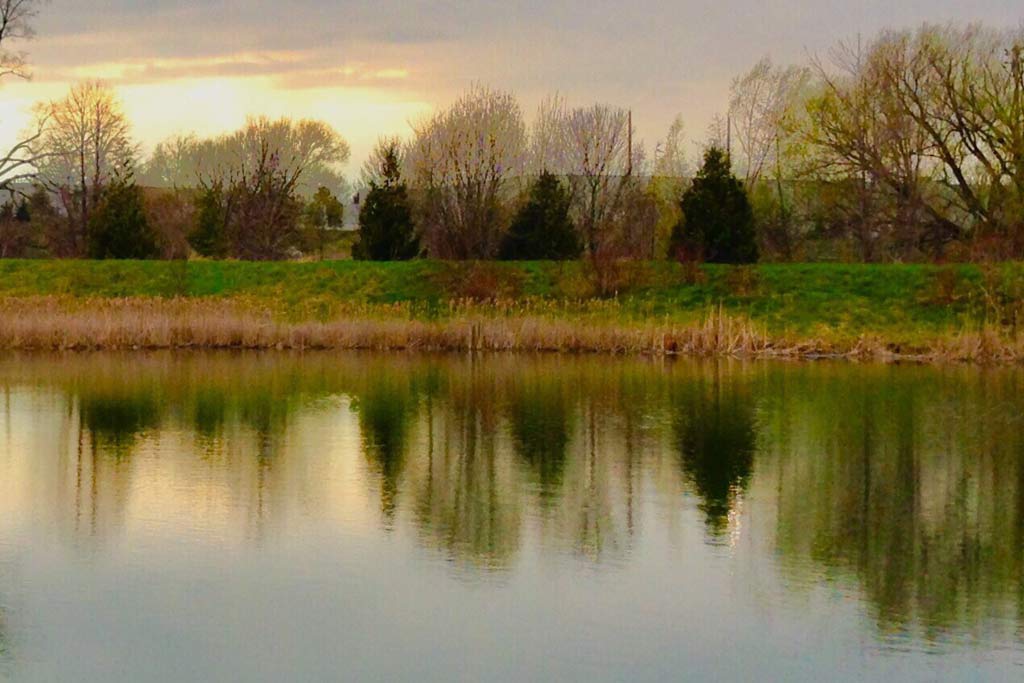
In March, your lakes are transitioning from Winter to Spring. The water temperature is still cold, limiting significant plant or algae growth. However, activity is starting to happen, some that you can’t necessarily see, that will impact how your lake “behaves” come Summer.
Filamentous Algae
As temperatures warm up, early growth of bright green stringy algae called Spirogyra often appears in shallow areas. While Spirogyra, and all algae species for that matter, are essential for oxygen production when present in moderation, large blooms can deplete oxygen levels in the water as it decomposes, leading to fish kills and other negative impacts on aquatic organisms. Decaying Spirogyra mats can also release nutrients into the water, contributing to eutrophication and planktonic algal blooms.
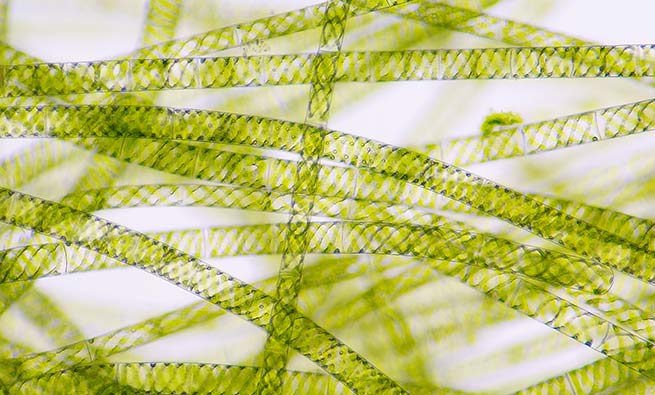
Spirogyra algae under a microscope
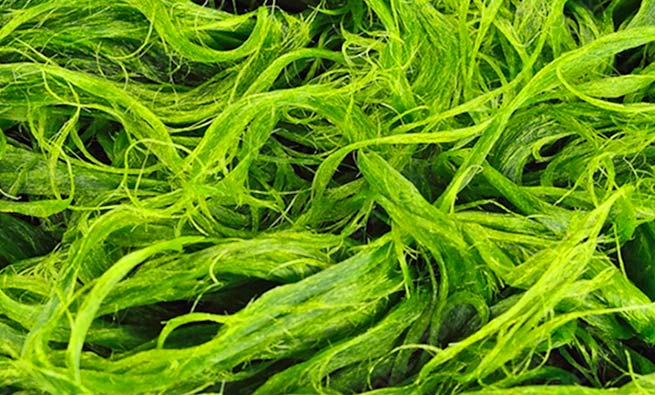
Spirogyra algae
Aquatic Plants
Our area’s most aggressive submerged invasive aquatic plants, especially Eurasian Watermilfoil (Myriophyllum spicatum) and Curlyleaf Pondweed (Potamogeton crispus), start emerging in March. These plants are notorious for growing early, taking up space we would like to see occupied by native plants.
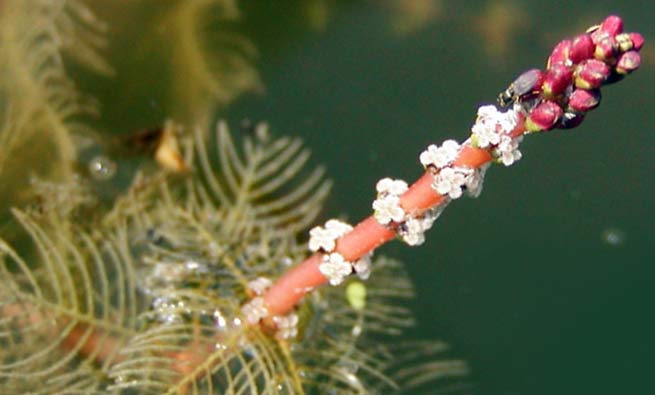
Eurasian Watermilfoil with seed head
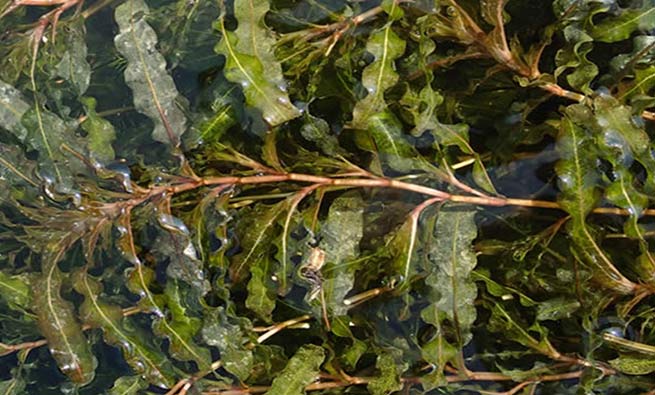
Curlyleaf Pondweed
Emergent Plants
Cattails (Typha spp.) and bulrushes (Schoenoplectus spp.) start greening up along the shoreline. Narrow-leaf cattail is a non-native species widespread in our area.
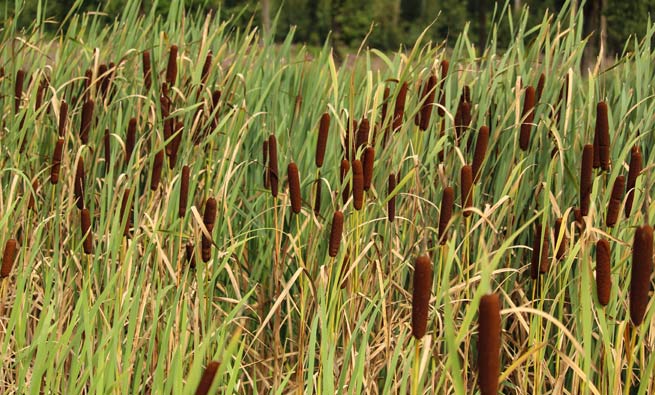
Cattails
Floating Plants
Duckweed and Watermeal are other potential plant growth in late spring. If your lake has a history of these tiny floating plants (Lemna or Wolffia spp.), they might begin emerging as the water warms.
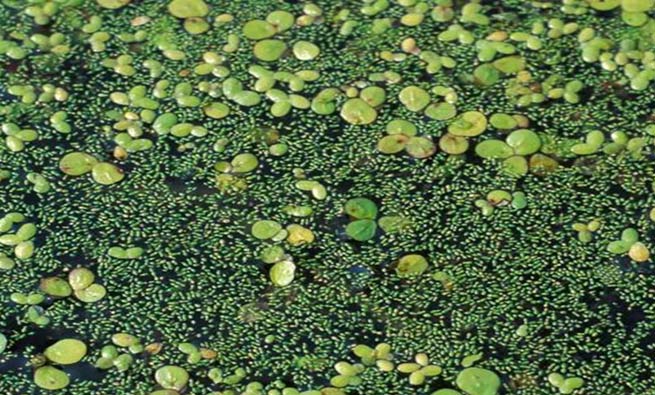
Duckweed and Watermeal
Duckweed, although bothersome, is a native aquatic plant to our area. It is more prevalent in inlets and bays. We understand the concern with duckweed in the Big Monon Bay on Lake Shafer. This area, specifically, was brought to the attention of SFLECC’s Aquatic Vegetation Committee. We have had several discussions with Indiana Department of Natural Resources (INDNR) about duckweed and since it is not an invasive species, they have told us “it is nature, and we have to live with it”. Furthermore, the INDNR will not give permits to treat duckweed. We need a water flow to move it along, and unfortunately, when we have little rain, there is minimal flow and it sticks around for too long.
We have also had talks with other lake associations about this problem. They also say it is a nuisance for them, but not much they can do about it. A few of the lake associations have had some success with lake thruster devices. They are a bit expensive, but can push the duckweed downstream faster into the main lake. As of now, this is the only option we can recommend that has had some success and is within the parameters of what INDNR allows.